Made from clay that
can take real life.
Everything I sell is handmade from high-fire stoneware and fired at 1250 °C. I glaze it with tested high-fire glazes, some of which I mix myself. That is why every piece is safe in the dishwasher, the oven and the microwave.
Everyday pieces go straight in after dinner.
Bake, roast and serve in the same dish.
Warm up your coffee in the cup you love.
Tested high-fire glazes, and some recipes I mix in the studio.
Same bag. Eight times the price.
Most cheap pottery is made from low-fire red clay. I use high-fire stoneware instead. Here is the difference.
per 12.5 kg bag · fired at about 1000 °C
- Cheap and easy to fire
- Stays more porous after firing
- Chips and cracks more easily in daily use
per 12.5 kg bag · fired at 1250 °C
- Fired until the clay becomes dense and strong
- Much more resistant to chips and daily use
- Dishwasher, oven and microwave safe with tested glazes
Price per 12.5 kg bag
Take it to 1250 °C.
Slide the temperature and follow a piece from wet clay to its final glaze firing.
Wet clay
Freshly thrown on the wheel. Still soft and full of water.
Before stoneware, there was Raku.
At fourteen, in a class of three with a teacher who had spent more than 40 years at the wheel, I fired Raku for my first three to four years. The piece leaves the kiln glowing hot, and fire, smoke and air finish it. Tap the four steps.
The glazed piece is heated quickly in a small kiln until the glaze melts and the pot glows orange.
With long tongs, the red-hot piece is lifted out of the kiln. The sudden cold air makes the glaze craze into fine cracks.
It goes into a container with sawdust, paper or leaves, which catch fire. The lid closes and the smoke takes the oxygen out of the glaze and clay.
Smoke stains the cracks black and can turn copper glazes metallic. After cleaning, every piece shows a pattern no one can repeat.
Caring for your ceramics.
Don't move a piece straight from the freezer into a hot oven.
Small variations in glaze and shape are signs of handmade work, not defects.
That is what it is made for. Coffee, dinner, flowers: stoneware gets better with life.
Good to know.
Is your pottery dishwasher safe?
Yes. Everything I sell is high-fire stoneware fired at 1250 °C with tested glazes, so it can go in the dishwasher.
Can I use it in the oven and microwave?
Yes. Just avoid sudden temperature jumps, like going straight from the freezer into a hot oven.
Is it all handmade?
Yes. Every piece is thrown and painted by hand in my studio in El Born. I don't sell anything made in moulds or in series.
Do you make your own glazes?
Some of them. I use tested high-fire glazes and also mix some of my own recipes in the studio.
Why does handmade stoneware cost more?
Every piece is made by hand, and my clay costs about eight times more than low-fire red clay. The result lasts for years of daily use.
Can I see the pieces in person?
Yes. My store and studio is at Carrer de Giralt el Pellisser, 1, in El Born, Barcelona.
See it, hold it.
Every piece is one of a kind. Find yours online or come to El Born.
Fired at 1250 °C, looked at for hours.
High-fire glazes move, pool and break over the edges of the clay. No two firings ever come out the same.
 Blue waterfall
 Red speckle
 Carved bronze
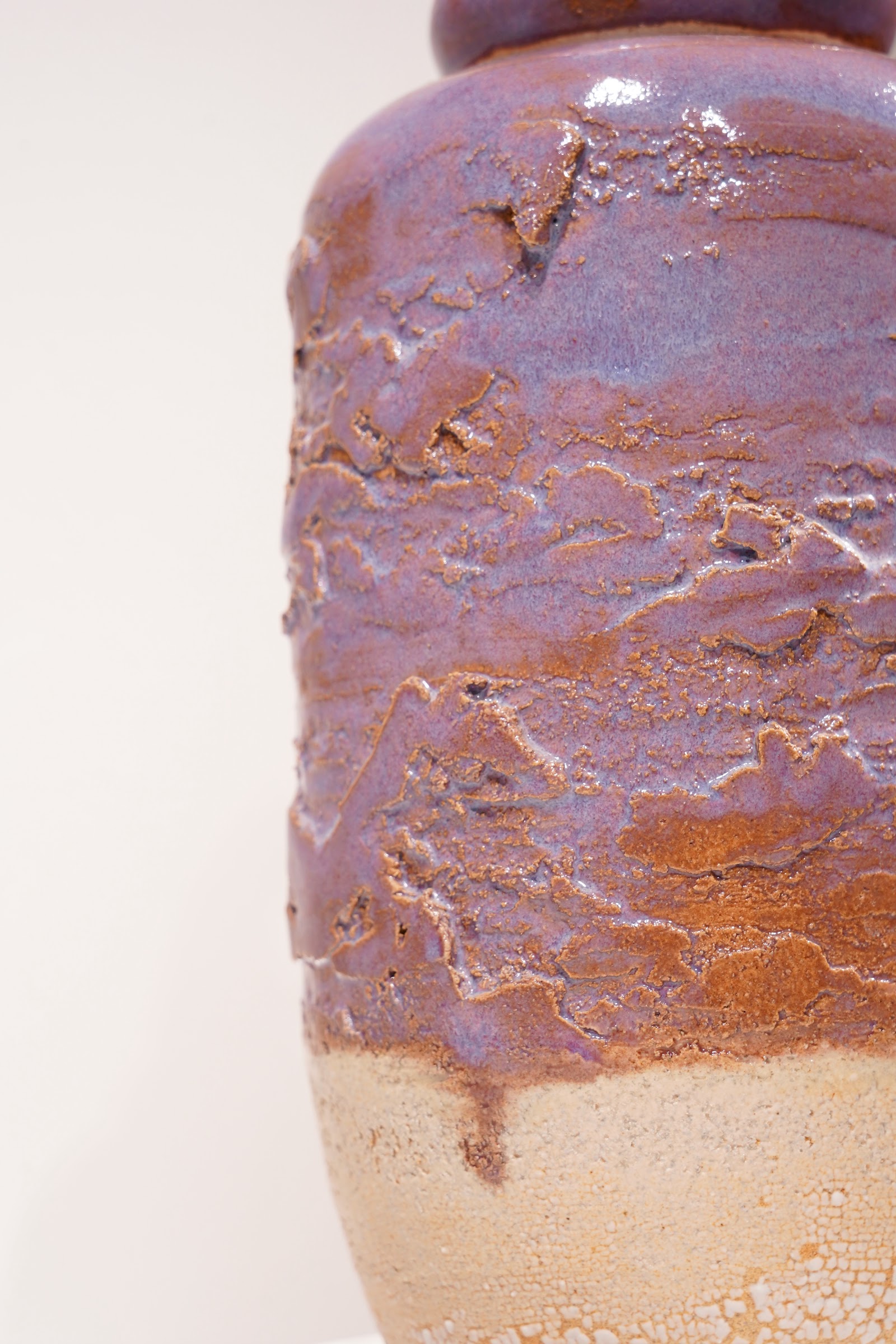 Layered lavender
 Teal drip
 Hand-rolled spirals